The Politics of Change: Art, Power and Responsibility
Thoughts on the 16th Gwangju Biennale: You Must Change Your Life (2026)
October 1st, 2026
Upon entering the 16th Gwangju Biennale, the eye wanders across a seemingly seamless arrangement of artworks. The first gallery opens onto a glass wall, establishing a threshold between the visitor’s present position and the possibilities of change that the exhibition proposes. Featuring 43 artists and collectives from different parts of the world, including Rossella Biscotti, Maya Watanabe and Sohrab Hura, the Biennale brings together a wide range of artistic practices under a title that is as compelling as it is unsettling.
Directed by Singaporean artist and filmmaker Ho Tzu Nyen, alongside curators Che Kyongfa, Park Gahee and Brian Kuan Wood, this edition approaches artistic practice as a continuous process of transformation. Yet upon encountering its title, a question immediately sprang in my mind: why use an imperative to frame an artistic proposition? With change at its centre, the word must addresses an expansive, undefined “you”, demanding that the viewer alter their life without specifying how, in what direction, or for what purpose.
Taken from the final line of Rainer Maria Rilke’s poem Archaic Torso of Apollo, You Must Change Your Life invokes the moral responsibility of bridging the gap between seeing and doing. In the poem, the encounter with an ancient sculpture transforms the viewer from a detached observer into someone confronted with the possibility of change. The gaze is effectively reversed: rather than simply looking at the artwork, the viewer is addressed by it. Art becomes more than an object of contemplation; it becomes a force capable of challenging our understanding of ourselves.
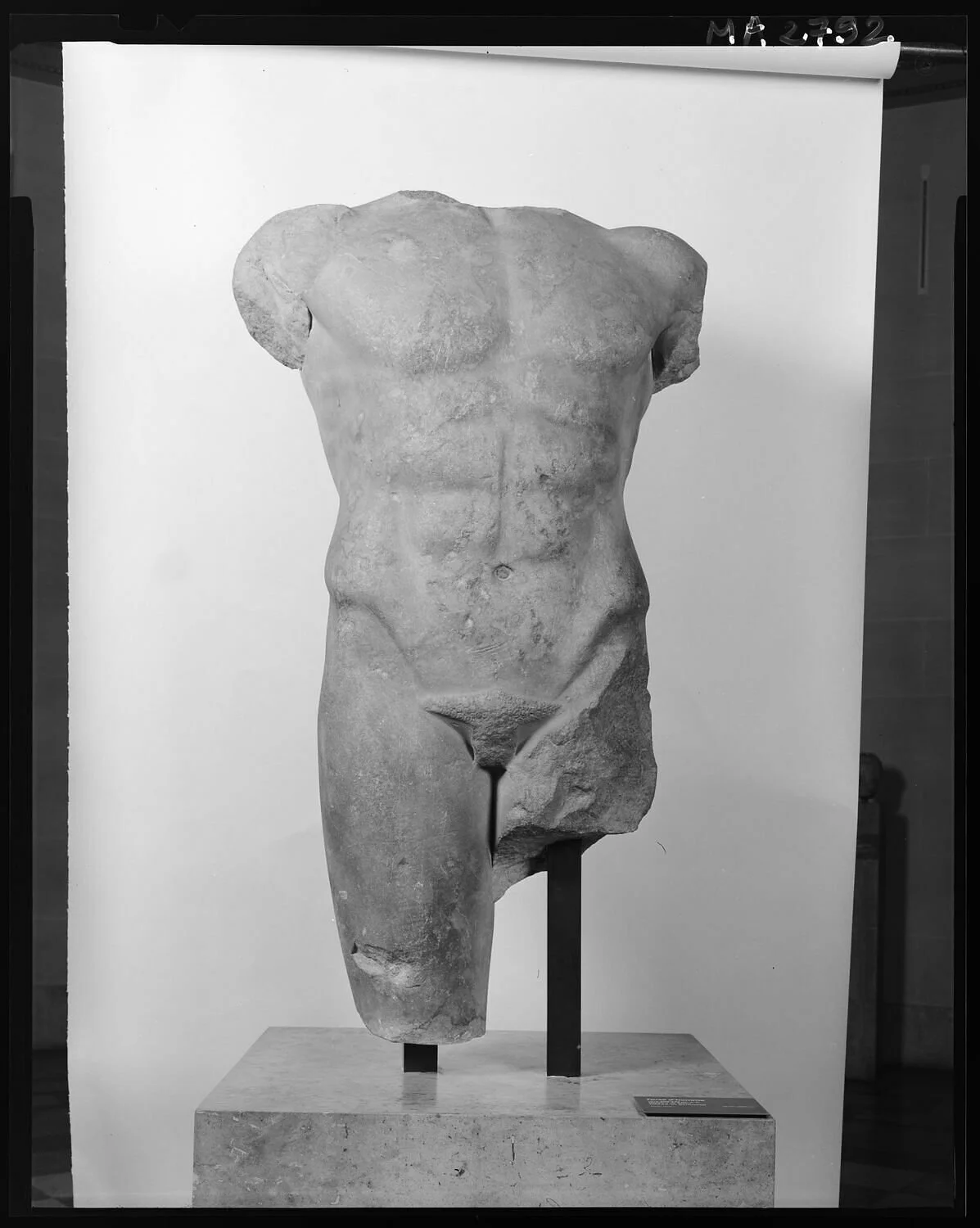
The Miletus Torso, 480 / 470 a.C.
Goldin+Senneby’s Lego Pedometer Cheating Machine (2019) offers a humorous entry point into this question. By confronting the walking visitor with a device designed to manipulate the measurement of physical activity, the work exposes the absurdity of an endless pursuit of improvement. What exactly are we improving, and according to whose standards? The promise of optimisation, deeply embedded in technological progress and capitalist discourses of productivity, turns self-improvement into an open-ended obligation. The work’s humour lies in exposing the emptiness of an imperative whose goal is never fully defined; yet its accessibility comes brilliantly from its ability to appear “relatable”.
Across its five galleries, however, the Biennale often seems to move between concepts without developing their implications sufficiently. Beneath its invitation to question oneself and remain open to the perspectives of others lies, at times, a patronising undertone. The exhibition seems to aim for accessibility and education, but its generalist approach often leaves the visitor with little more than the instruction to remain open to change. The Biennale demands transformation while offering little guidance on how its visitors might engage with that demand. Its openness is potentially productive, but does the exhibition give that openness enough substance to become meaningful?
Lygia Clark’s iconic Bichos series, whose replicas are presented in the Landscapes and Learning section, provides a particularly revealing example. Arranged on a circular table, the articulated sculptures invite visitors to touch, manipulate and transform them, with instructions to return the pieces to their original configuration afterwards. The experience offers a tangible form of participation: change becomes something the visitor can physically enact. Yet this freedom remains carefully regulated. The visitor may alter the work, but only within a framework established by the institution. This does not diminish the significance of Clark’s practice; rather, it exposes a tension in the way the exhibition frames participation. The encounter raises a question that extends beyond the sculptures themselves: how much room for transformation does the Biennale genuinely allow, and how much does it prescribe?
The presence of Jeju’s volcanic rocks introduces a different understanding of change. Presented as a participant artist in the exhibition rather than merely as objects, these geological formations embody transformations unfolding across vast stretches of time. Their presence suggests that change is not always the result of conscious intervention; it can also be gradual, material and inevitable. Yet this position sits uneasily alongside the title’s moral imperative. If change is inevitable, what exactly are we being asked to do? The Biennale oscillates between demanding change and presenting it as an unavoidable condition of existence, without fully resolving the tension between the two. The question of how and why we should change remains open, but not always in a way that feels generative.
This uncertainty becomes particularly significant when considered alongside the Biennale’s institutional position. In August 2026, the Foundation initially replaced the designation “Taiwan Pavilion” with “NTMoFA Pavilion”, referring to the National Taiwan Museum of Fine Arts. Following protests from Taiwanese artists and cultural authorities, the original name was restored on August 26. The decision was followed by the withdrawal of the participating Chinese artists and curatorial team, who opposed the use of the name Taiwan Pavilion. The controversy exposed the geopolitical pressures under which the institution operates, but it also raised questions about its capacity to defend the principles that underpin its public identity.
The episode does not, in itself, invalidate the artistic proposition of the main exhibition. It does, however, make the relationship between rhetoric and institutional practice difficult to ignore. A Biennale that asks its visitors to reconsider their positions and embrace transformation must also be prepared to examine its own. What does it mean to demand change while negotiating the political conditions under which certain identities can be named and represented? And what remains of the imperative when the institution itself appears reluctant to take a position? The controversy suggests that change is not merely a matter of individual perception, but also of power, negotiation and the willingness to confront uncomfortable consequences.
Across its many artists and diverse political, social and aesthetic approaches, the Biennale ultimately risks becoming a showcase of possibilities: a little something for everyone, without a sufficiently clear sense of whom it addresses or what kind of engagement it hopes to foster. Such plurality does not automatically amount to democratisation. Diversity of content is not the same as accessibility, and openness is not necessarily a substitute for curatorial direction. Nor does bringing together a wide range of practices automatically produce a meaningful dialogue between them.
This question became particularly tangible as I considered the presence of children in the exhibition. What might a young visitor take away from moving freely between the intense digital avatars of Lu Yang’s DOKU and the politically charged photographic interventions of Kiri Dalena’s Erased Slogans? These works offer very different encounters with technology, identity and political violence, but their intensity also raises questions about interpretation and mediation. How can an exhibition encourage young visitors to engage with difficult realities without assuming that exposure alone produces understanding? If art can contribute to human development, what responsibility does the institution have to provide the tools through which that encounter might become meaningful?
My concern is not that children should be shielded from difficult realities, nor that art should be made comfortable or easily digestible. Rather, it is that exposure alone does not guarantee understanding. Presenting children with visually intense and emotionally charged material without offering meaningful tools for interpretation risks reproducing the very culture of screens and unfiltered content that increasingly occupies spaces of childhood development. From classrooms to family dinner tables, screens are often used to keep children occupied, sometimes at the expense of the attention, dialogue and reflection through which understanding develops. If a biennale is to offer something beyond another succession of images competing for our attention, it must consider what enables its youngest visitors to move from looking to understanding.
A biennale need not offer definitive answers, but it should consider how different audiences can meaningfully engage with the questions it raises. This also means asking whom the exhibition is intended to reach, and what forms of mediation different visitors might need. Otherwise, the ambition to educate risks becoming patronising in its own right: it assumes that exposure is sufficient, while leaving visitors to make sense of the experience on their own.
Gwangju is a city whose relationship with art, culture and political change cannot be separated from its history. The May 18 Democratic Uprising of 1980, in which citizens resisted military dictatorship and hundreds of people were killed during the violent crackdown, became a defining moment in South Korea’s struggle for democracy. Its documentary archives were inscribed on UNESCO’s Memory of the World Register in 2011, while the uprising helped shape the political consciousness that culminated in the nationwide democratic movement of 1987.
Founded in 1995 on the fifteenth anniversary of the uprising, the Gwangju Biennale carries this history into the contemporary art world. Its relationship with the city is therefore more than geographical: it is bound to a collective memory of resistance, sacrifice and the struggle to make political change possible. This history makes the Biennale’s institutional responsibilities particularly significant. Gwangju is not simply a backdrop against which an international exhibition takes place; it is a city whose identity has been shaped by the consequences of political confrontation.
In this context, You Must Change Your Life takes on a different meaning. Change in Gwangju is not an abstract imperative arriving from outside, nor simply an invitation to individual self-improvement. It is rooted in a history of collective action, in which the possibility of a different future was neither inevitable nor guaranteed, but demanded through struggle. The distinction matters: while the exhibition often presents change as an open-ended process, the city’s history reminds us that political change requires specific commitments, collective agency and a willingness to confront power.
Perhaps the question the Biennale should ultimately confront is not whether we must change our lives, but what kind of change we are being asked to pursue, for whom, and under what conditions. Biennales are never politically neutral: their selection of artists, institutional alliances, public narratives and responses to external pressure all participate in shaping the cultural landscape they claim to represent. To invoke change without examining these conditions turns a political question into a generalised moral lesson.
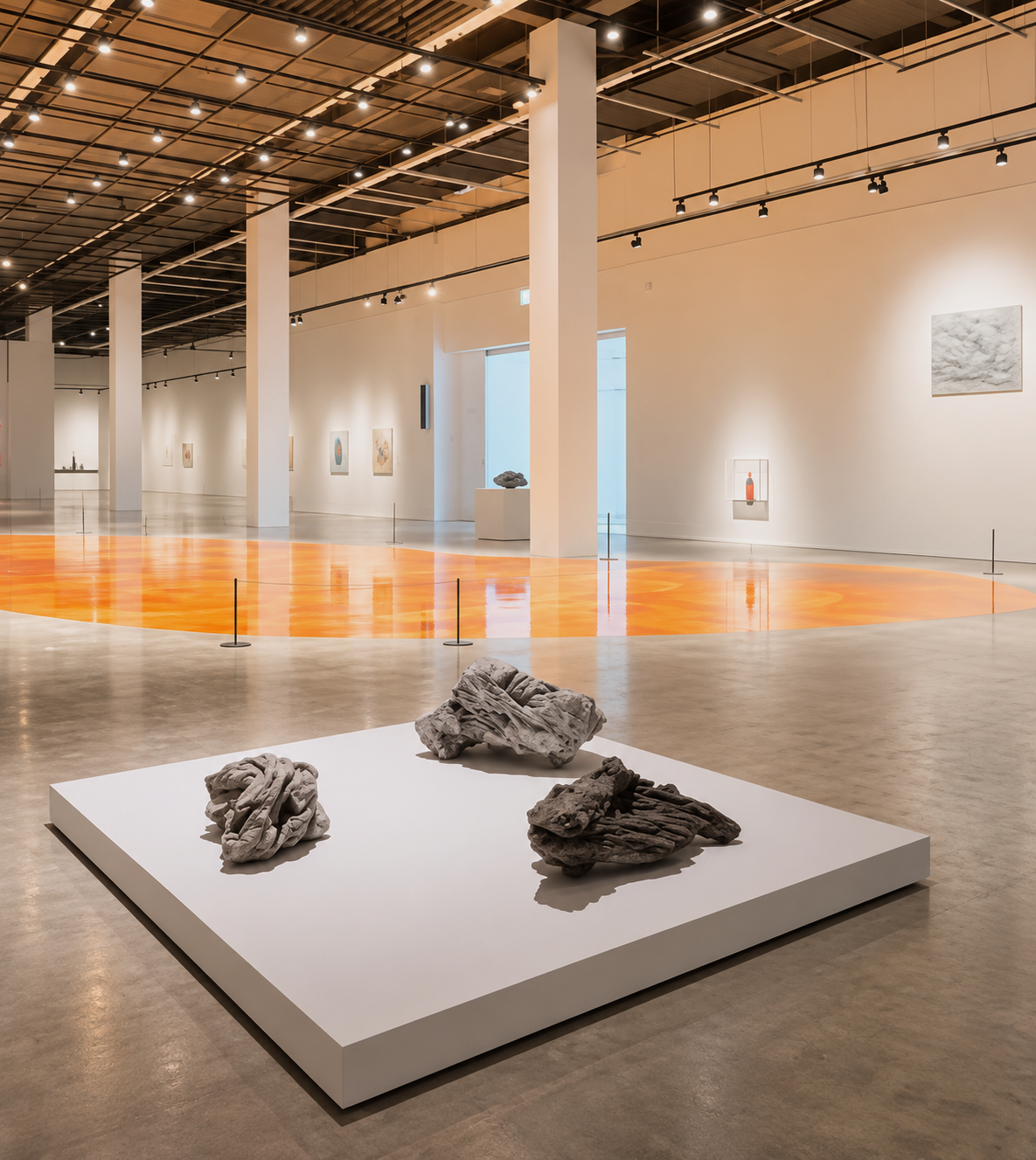
Lava Rocks from theJeju Stone Park. Gallery 1 - Molecules and Me. 2026. Gwangju Biennale
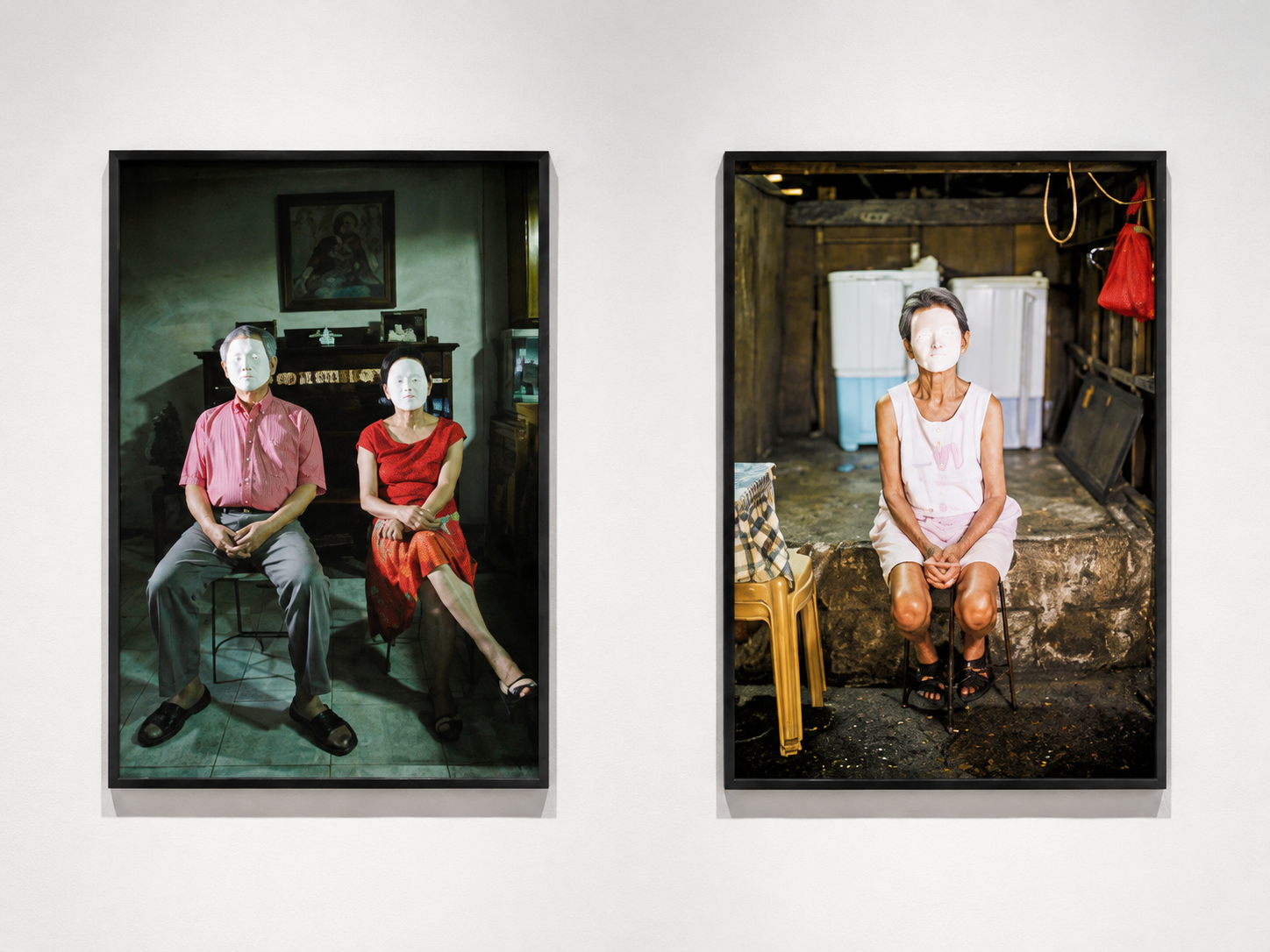
Life Masks Series, Kiri Dalena, 2013.
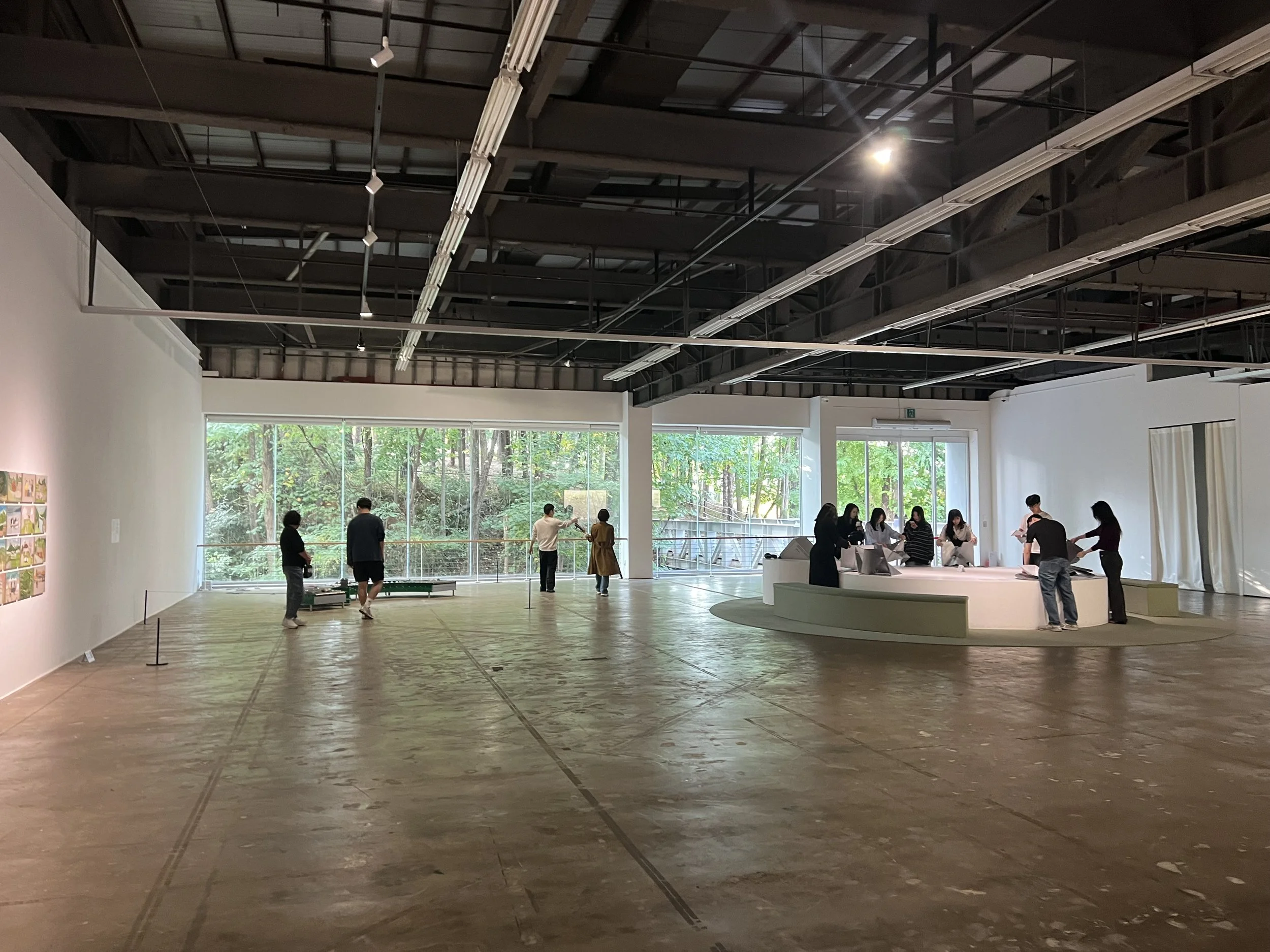
Gallery 3 - Landscapes and Learning. 2026. Gwangju Biennale